Lenses of all types





Meaning of the delivery status
Immediately available
The item is in stock and can be shipped at short notice.
The item is also in stock in our shop in Düsseldorf.
Please note: Despite updating our website regularly, it is possible that an item may be out of stock but shown as available for a short time, especially when orders are high. All information is therefore without guarantee. We will inform you immediately if there is a delay in the expected availability/delivery time. The availability information refers to an order quantity of 1. Availability may vary for higher order quantities.
Delivery time (from-to) working days after receipt of payment
The item is not in stock in our inhouse warehouse and will be ordered from the external warehouse/manufacturer or disributor after you have placed an order. The expected delivery time is listed with the item.
Please note: Despite updating our website regularly, it is possible that an item may be out of stock but shown as available for a short time, especially when orders are high. All information is therefore without guarantee. We will inform you immediately if there is a delay in the expected availability/delivery time. The availability information refers to an order quantity of 1. Availability may vary for higher order quantities.
Item has been ordered
The item has already been ordered from the manufacturer or distributor. The delivery time is usually between 1 week and 2 months. As soon as a more precise delivery time is known, we will publish the details on our website. After placing the order, you will be informed regularly about the delivery time.
Available at a specified date
The item has already been ordered from the manufacturer or distributor. We have been informed of the expected delivery date.
We are happy to order for you
The item is currently not in stock and will be ordered for you from the manufacturer or distributor after you have placed an order. The delivery time is usually between 1 week and 2 months. After placing the order, you will be informed regularly about the delivery time.
Item has been ordered. Delivery time 1-3 months
The item is currently not available. We were not given a delivery time. Experience shows that the expected delivery time is 1-3 months.
Goods have been ordered. Long delivery time expected. Pre-order now and secure your place on the waiting list.
The manufacturer or supplier cannot confirm a date, so we assume a waiting time of 2 to 9 months. You can still order the item and secure your place on the waiting list.
Delivery alarm
You would like to be informed as soon as the item is in stock?
Notification when the product is back in stock No reservation and no place on the waiting listYou want to reserve the product?
Order now, pay later (prepayment) Notification when the product is back in stock Product reservation and fixed place on the waiting list Cancellable at any time free of charge (until delivery)Often a decision for life - choosing the right lens
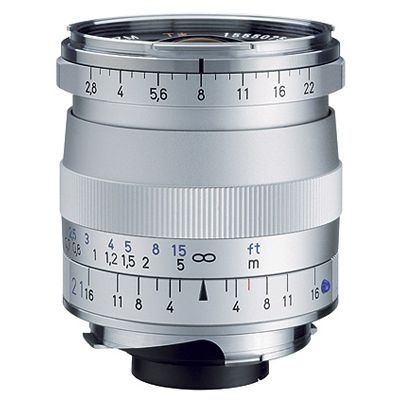
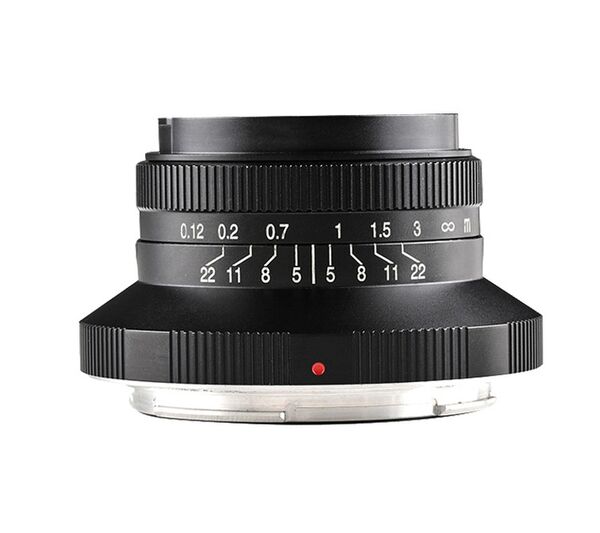
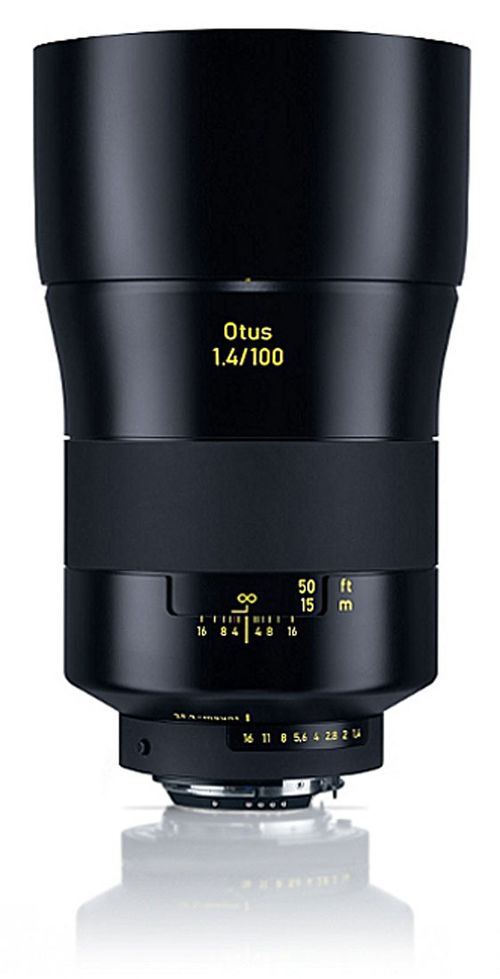
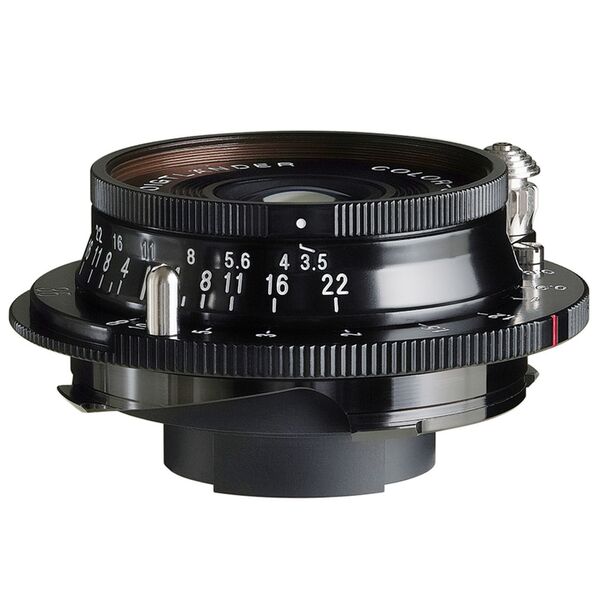
Photography is always a question of focus. Clearly, it is the lens that changes the focus and makes the difference. And it is also always a question of ability, personal preferences and strengths. Of course, the question of which lens the photographer chooses also depends on the camera systems available - whether they prefer to work with system cameras (CSC) or single-lens reflex cameras (SLR). Fixed focal lengths do not have a zoom, so the photographer's eye is required here, as he must know which setting is suitable for which situation. On the other hand, they have a particularly good imaging performance with very low distortion, resulting in their superiority over other lenses. Fixed focal lengths are suitable for a whole range of subjects, from landscape photos to portraits. All lenses, such as those from Lensbaby, can be adjusted manually. In the fixed focal length range, there are new high-performance classics, optimized for digital technology, for example from Leica or the lenses from Meyer-Optik-G?rlitz, which have been revived according to original plans and adapted to digital technology. Among the Zoom and Megazoom lenses are high-performance lenses with a particularly wide focal length range and fast, virtually silent autofocus, suitable for wide-angle or telephoto applications. Here, Nikon is causing great amazement with the world's first ultra-wide-angle lens with image stabilizer, which ensures strong images even in low light. Horizons that bend and pillars that bulge forward for no reason - every photographer knows such difficulties. Shooting without distortion is a particular challenge with landscapes and architecture alike. Wide-angle lenses are available in the fixed focal length, macro, zoom and fisheye ranges, including a particularly distortion-free lens from Canon. While zooms and megazooms also cover the telephoto range, pure telephoto lenses are not suitable for the telephoto range Telephoto lenses - both as fixed focal lengths and as zooms - especially for wildlife and nature photography. At the top end, lenses from Hasselblad and Leica eliminate the need for any digital post-processing due to their outstanding quality. Olympus comes up trumps with the lightest and most compact telephoto lens currently available (Micro Four Thirds mount), while Sigma has the world's first lens with a speed of 2.8 at a focal length of 500 millimetres. Close up to the subject - the small really big - that is the specific feature of the Macro and its wide range of applications. Most lens manufacturers offer lenses for this special world in miniature - Canon, Nikon, Sony, Leica or Pentax as well as Tamron, Sigma or Samyang. Fish-eye lenses are available from D?rr, Samyang, Pentax, Panasonic, Olympus, Nikon, Sony and Walimex. Fish-eye photography can be used to achieve creative results and produce surprising effects, such as mountains that curve and walls that bulge outwards. Tilt-and-shift lenses from Canon, Nikon, Laowa, Leica, Samyang or Walimex, for example, help the photographer to correct the perspective of the image, i.e. to compensate for particular distortions, such as converging lines in architecture. Tilt" means panning (of the lens system in relation to the image plane). "Shift", on the other hand, means to move (for example, the focus area can be shifted while maintaining the exposure time).

